Whales and Whale Sharks of Australia:
The Ultimate Guide to Where to Find Them
Australia is one of the few places in the world where you can encounter such a wide variety of large marine life. From migrating humpback whales along the coastline to the slow-moving whale sharks in the tropics, the opportunities to observe — and in some cases swim alongside — these animals are world-class.
In this guide to whales and whale sharks of Australia, we’ve broken down the key species, where to find them, and what to expect when interacting with them in Australian waters.
This isn’t about ticking a box. It’s about understanding these animals, where they move, and how to experience them in a way that respects both the ocean and the wildlife within it.
Humpback Whales in Australia: Migration, Hotspots and Encounters
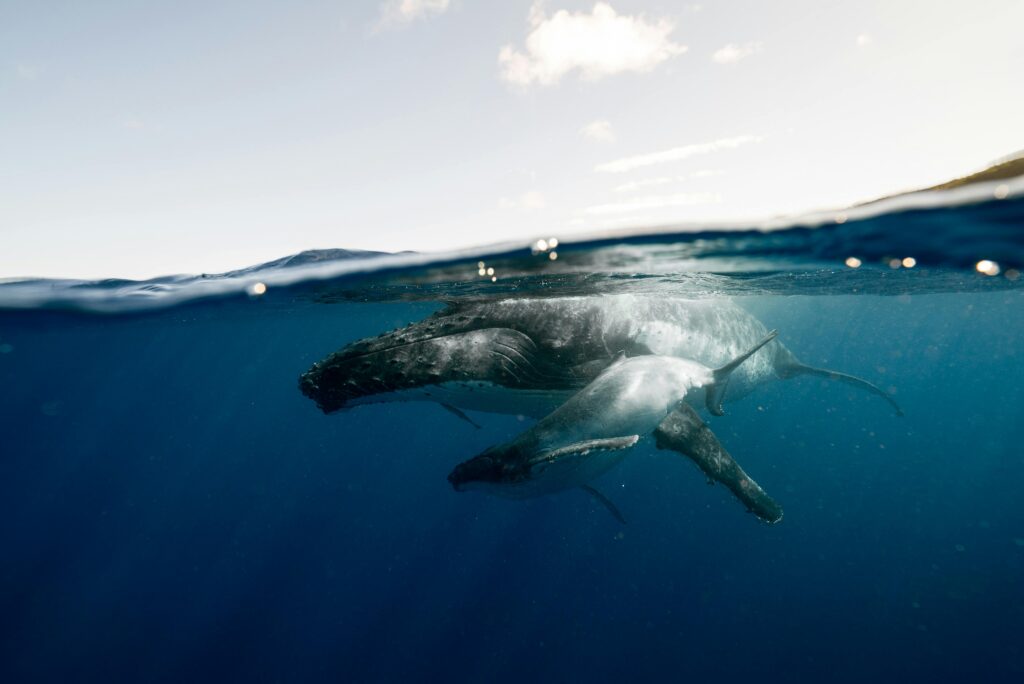
Whilst you can find humpback whales on the East Coast, West Coast and the Southern regions of the Australian coastline, the largest and most accessible population is along the East Coast of Australia, with the two main states being New South Wales and Queensland.
This migration, once threatened, has been protected for many years and due to that protection, numbers have increased significantly to roughly between 50–60,000 whales.
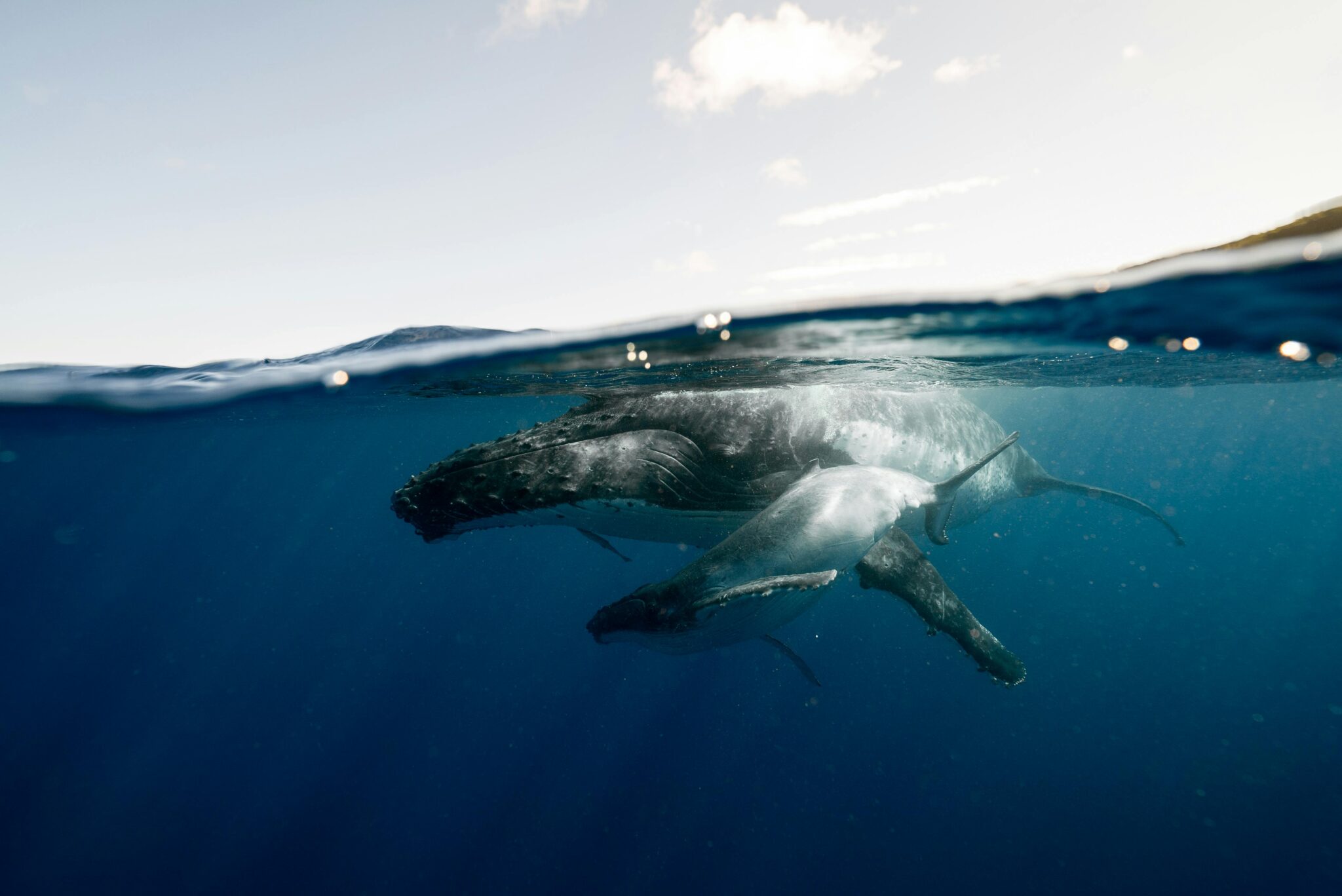
Their migration starts in the nutrient-rich waters of Antarctica, where they feed through the summer months. From there, they begin their journey north to mate, and for mothers to give birth to their calves in warmer waters.
Where to See Humpback Whales in Australia
There are great viewing sites right across the New South Wales coastline, with many whale watching companies offering experiences along the coast. Alternatively, you can simply get yourself to a headland with a high vantage point and watch the humpbacks at play.
New South Wales typically does not offer swim-with-whales experiences.
Queensland is where humpback whales slow down during their migration. This is where they stop to give birth and begin life with their calves in shallow, warmer waters. Locations such as the Whitsundays and Hervey Bay have traditionally been key birthing areas, although in recent years there have been sightings as far south as the Sunshine Coast.
Swimming with whales is more readily available along the Queensland coastline, with hotspots including Hervey Bay, Sunshine Coast, and Gold Coast.
Hervey Bay, being a marine park, has stricter regulations. Guests are not permitted to wear fins and are required to hold onto a rope attached to the vessel. Outside of marine parks, such as the Sunshine Coast and Gold Coast, rules still apply around approach distances, however experiences are more flexible.
All of these encounters are unique and leave a lasting impression, often creating a stronger connection to the ocean and a desire to support conservation.
The biggest threats to humpback whales remain overfishing in Antarctica, boat strikes, and shark nets.
Minke Whales in Australia
Minke whale encounters are far less common but offer one of the more unique experiences within whales and whale sharks of Australia.
The primary hotspot for minke whales is off the coast of Cairns in Far North Queensland. Operators typically depart from Cairns and travel out to the Ribbon Reefs, which are home to a wide variety of marine life, including these curious whales.
Where to Find Minke Whales
These encounters generally take place within marine park regulations. Guests are required to hold onto a rope and are not permitted to wear fins during the interaction.
Minke whales are known to be curious and will often approach swimmers on their own terms, which creates a very different experience compared to other whale species.
The journey out is longer, but for those who make it, it is a highly rewarding experience.
Whale Sharks of Australia
When discussing whales and whale sharks of Australia, whale sharks stand apart.
They are the largest fish in the ocean, yet they are calm, slow-moving, and relatively easy to swim alongside due to their nature. Compared to whales, they are less reactive and more predictable in their movement.
Whale sharks were once hunted in regions to Australia’s north, however many of these areas have shifted towards eco-tourism, recognising the long-term value in protecting and showcasing these animals.
Where to Swim With Whale Sharks in Australia
Whilst there are occasional sightings along the East Coast, the most consistent populations are found along the West Australian coastline, with the main hotspot being Exmouth and the Ningaloo Marine Park.
Exmouth is a small coastal town that becomes a major hub during whale shark season. Operators use spotter planes to locate whale sharks before positioning boats for in-water encounters.
These experiences are highly regulated to ensure minimal impact on the animals and a safe interaction for participants.
Whilst Ningaloo is home to a wide variety of marine mammals, swimming with mammals is not permitted in this region.
Another option is to locate whale sharks independently from a recreational vessel. However, this requires a strong understanding of ocean conditions, offshore environments, and marine life behaviour, as it is deep water and encounters with other predators are possible.
Orcas in Australia
One of, if not the largest populations of orcas in the world resides in the south of Western Australia, with a key hotspot being Bremer Bay.
Tours operate in this region, however swimming with orcas is not permitted anywhere in Australia. Encounters are strictly observational from the vessel.
These animals are apex predators and are often seen hunting in coordinated groups, particularly during humpback migration periods where calves may be present.
Whilst often misunderstood and feared, there are no recorded cases of orcas attacking humans in the wild outside of captivity.
Respecting Whales and Whale Sharks of Australia
This is meant as a guide to the hotspots for whales and whale sharks of Australia.
If considering taking a recreational vessel or entering the water with any of these animals, it is important to respect them first and foremost.
The best way to do this is to:
- research local laws and regulations
- understand approach distances
- minimise disturbance
- follow marine park guidelines
These rules are in place to protect both the animals and the people interacting with them.
Final Thoughts
Australia offers some of the most consistent and accessible large marine life encounters in the world.
From humpback whale migrations along the East Coast, to minke whales in the north, whale sharks in Western Australia, and orcas in the south — each experience is different, but all equally impactful.
Understanding where to go, when to go, and how to behave around these animals is what makes the experience worthwhile.
Done properly, these encounters not only leave a lasting impression, but also build a deeper respect for the ocean and the wildlife within it.
Written by Pressure Project founder & owner Adam Sellars