Freediving Safely
6 Core Principles Every Freediver Should Live By
Freediving is often misunderstood. From the outside, it can look extreme — holding your breath, diving deep, entering a world where humans aren’t designed to stay. In reality, when practised correctly, freediving is one of the calmest, most controlled, and safest ways to explore the underwater world.
True safety in freediving doesn’t come from memorising rules alone. It comes from understanding how to think, prepare, and behave in the water. These core principles guide every safe freedive, regardless of depth, environment, or experience level.
Whether you’re brand new to freediving in Australia or already certified, the six principles below form the foundation of everything we teach at The Pressure Project.
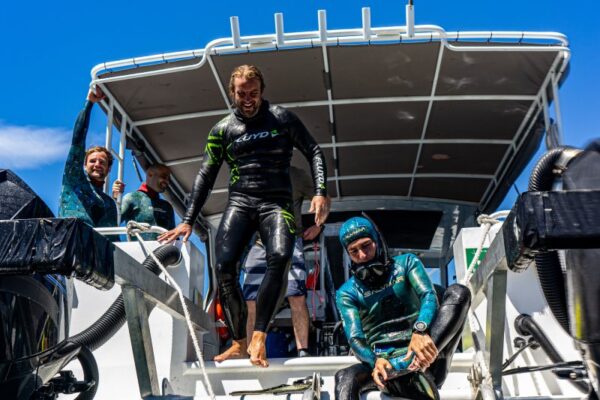
Principle #1: Freediving Is a Team Practice
Freediving is never an individual activity, no matter how experienced you are.
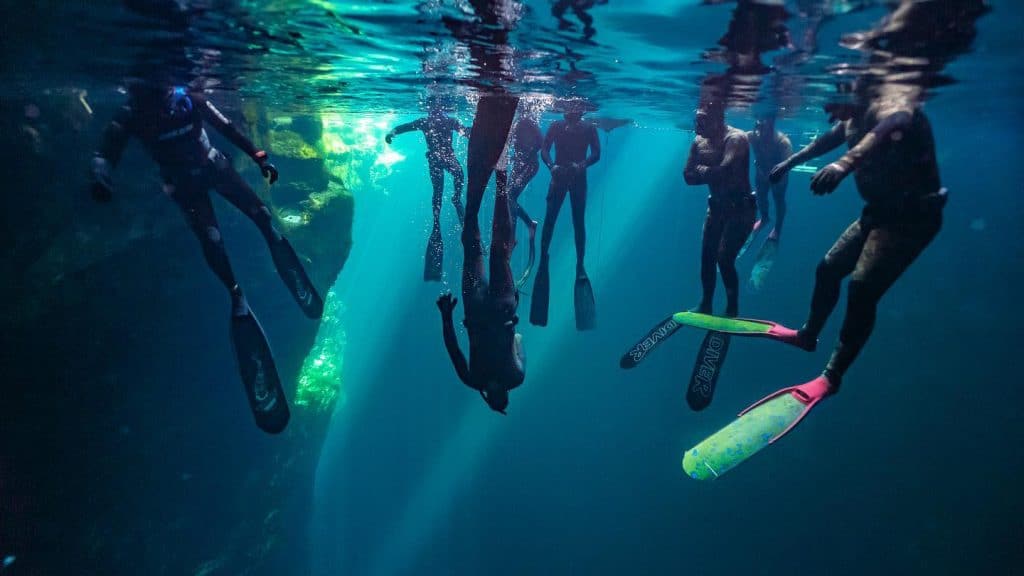
Every freedive relies on trust, communication, and shared responsibility. Diving with a trained buddy or safety team ensures that someone is always actively watching, ready to respond, and aware of what “normal” looks like for you.
A strong freediving team doesn’t just exist for emergencies. It:
plans dives together
discusses depth, time, and intention
observes breathing and body language
supports calm, unrushed recovery at the surface
This team-based approach dramatically reduces risk and builds confidence. It also creates a calmer mental state — knowing you are supported allows you to relax, which directly improves safety and performance.
At The Pressure Project, teamwork is taught from the very first session. Because in freediving, safety is something you create together.
Principle #2: Relaxation Is a Safety Skill
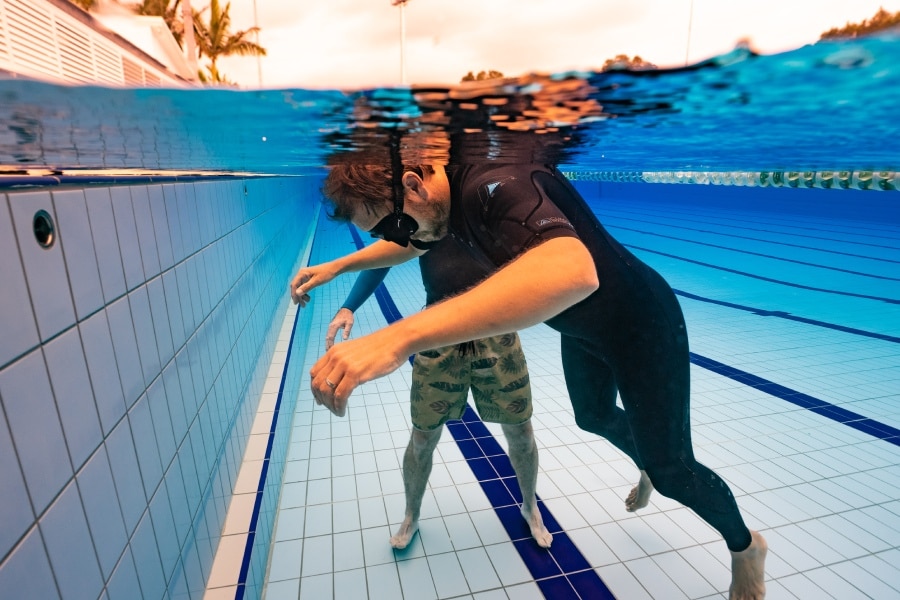
Relaxation in freediving isn’t about being passive — it’s an active, trainable skill.
When the body is tense, oxygen is burned faster, movements become inefficient, and equalisation becomes more difficult. Mental tension often leads to rushed breathing, overthinking, and poor decision-making.
Safe freedivers prioritise relaxation long before they ever leave the surface. This includes:
slow, controlled breathing
soft facial muscles and jaw
minimal movement in the water
a calm, focused mental state
This is why freediving training places such a strong emphasis on breathwork, body awareness, and mental control. Relaxation allows the natural dive response to activate, helping the body conserve oxygen and remain stable throughout the dive.
In freediving, calmness isn’t just comfort — it’s protection.
Principle #3: The Surface Is Where Safety Begins
Many people think the most dangerous part of a freedive happens at depth. In reality, safety begins — and often ends — at the surface.
Proper surface behaviour sets the tone for the entire dive. This includes:
unrushed pre-dive breathing
clear communication with your buddy
adequate rest between dives
controlled recovery breathing after surfacing
The dive is not complete when you reach the surface. The moments immediately after a dive are critical, as the body transitions back to normal oxygen levels. Conscious recovery breathing and staying present during this phase significantly reduce risk.
Safe freedivers treat the surface as part of the dive itself — not as downtime between dives.
Principle #4: Progress Is Built Slowly — Not Forced
One of the biggest risks in freediving comes from trying to advance too quickly.
Depth, time, and technique all improve best when they’re allowed to develop naturally. Forcing progression — whether through ego, comparison, or impatience — often leads to poor technique, stress responses, or injury.
Safe freediving progression includes:
consistent technique before increasing depth or time
listening to physical and mental cues
respecting days when the body feels fatigued
understanding that setbacks are part of learning
In freediving, patience is a safety skill.
Those who progress the furthest are often the ones who move the slowest.
Principle #5: Awareness Matters More Than Performance
Freediving safely is not about pushing limits — it’s about understanding signals.
Your body communicates constantly during a dive: through tension, breathing patterns, comfort levels, and mental clarity. Ignoring these signals in pursuit of numbers disconnects you from the very awareness that keeps you safe.
Developing awareness means:
recognising stress before it escalates
knowing when to abort a dive without hesitation
staying mentally present instead of outcome-focused
adapting to changing ocean conditions
The ocean changes daily.
So should your approach.
Freedivers who prioritise awareness over achievement stay safer — and dive longer.
Principle #6: Education Is the Foundation of Safety
Freediving may look simple, but it is a technical discipline that demands education.
Learning from certified instructors, understanding physiology, and training within structured systems dramatically reduces risk. This is especially important in Australia, where conditions can vary widely between locations, seasons, and environments.
Formal education teaches:
blackout prevention and response
rescue techniques
proper breathing and recovery protocols
risk management in open-water environments
A freediving course isn’t just about learning to hold your breath.
It’s about learning how to return safely every time.
Why Freediving Safety Creates Freedom
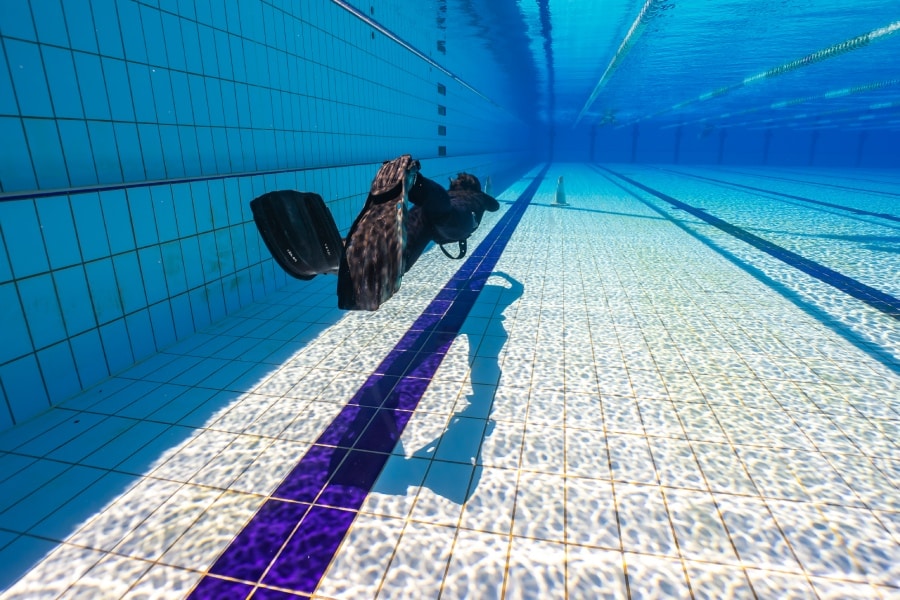
Freediving safety isn’t restrictive — it’s what allows true freedom underwater.
When the fundamentals are respected, the mind settles.
When systems are in place, confidence grows.
When safety is prioritised, performance improves naturally.
The most experienced freedivers aren’t the ones chasing records — they’re the ones who understand pressure, remain calm, and make conscious decisions at every stage of the dive.
Learn to Freedive Safely in Australia
If you’re looking to learn freediving safely in Australia, The Pressure Project offers freediving courses and retreats designed around calm progression, awareness, and real-world conditions.
Our approach focuses on:
small group training
experienced instructors
strong safety systems
education-first progression
Freediving isn’t about how deep you go.
It’s about how well you manage pressure — in the water and within yourself.
Explore our freediving courses and retreats across Australia and beyond.
Quick Recap: The 6 Golden Principles of Freediving Safety
Freediving is never a solo activity
Relaxation is a learned safety skill
The surface is part of the dive
Progression must be gradual
Awareness outweighs performance
Education creates long-term safety